

POTUS 11: OK OK

17 minutes read time
1841 was a year that saw three presidents: POTUS 8 (Van Buren) wrapping up his four-year term. POTUS 9 (Harrison) won the 1840 election. He took office in March 1841 and died on his 33rd day in office. His vice president, John Tyler, became POTUS 10. He was the first to succeed to the presidency in this way. John Tyler was also the first president to face impeachment proceedings. His arrival marks a new 1 through 9 cycle, Cycle Two.
POTUS 10 John Tyler (1841-1845) One-term Whig. US Representative – VA, Governor of Virginia. vice president to POTUS 9. Became president upon the death of POTUS 9. Slaveholder. Expelled from Whig party and most of his Cabinet resigned. Supported slaveholder rights and expansion of territory. Florida became the 27th state. Frequently makes the Top 10 list for worst POTUS.
Instead of running for re-election in 1844, which was sure to be a failure, POTUS 10 endorsed James K. Polk who shared common beliefs around pro-annexation.
With 1844 presenting master number 44, it was marginally auspicious for the arrival of POTUS 11 at this time. If each POTUS in Cycle One had served two terms, that cycle would have lasted 72 years. However, it finished twenty years sooner than that, ending with one death in office and three presidents in one year. The unpredictable parade of presidents leading up to this point could have resulted in a much later POTUS 11. It could also have been someone other than Polk.
That person could have easily been Henry Clay of the Whig Party. As Senator from Kentucky, Clay was Speaker of the House during the 1824 election, and a presidential candidate. None of the four candidates (Clay, Adams, Jackson, and Crawford) had a majority of electoral votes. Clay was disqualified for not being in the top three. With Clay as Speaker of the House, Congress chose Adams over Jackson.
Many considered this a “corrupt bargain” especially when Adams, now POTUS 6, appointed Clay as Secretary of State. As a result, Jackson, who could have been POTUS 6, considered the Adams administration illegitimate. Jackson won the 1828 election after defeating Clay again to become POTUS 7 for two terms.
The 1836 election involved incumbent Vice President Van Buren and three Whig candidates. They were united in their hatred of POTUS 7 (Jackson). Ultimately, the election went to Van Buren, who became POTUS 8. This would be the last time until 1988 for an incumbent vice president to be elected as president.
The 1840 election saw a rematch between Van Buren and Harrison. Harrison became POTUS 9 but only served for a month. His vice president became POTUS 10.
Although POTUS 8 (Van Buren) lost re-election in 1840, he ran again in 1844 but Clay received the party nomination. Clay may have felt it was finally his turn at the helm. He ran a close race against James Polk of the Democratic Party. Polk emerged as a dark horse candidate who had initially sought the office of vice president. Van Buren and Clay both opposed the annexation of the Republic of Texas. In contrast, Polk supported the annexation. This difference in position resulted in Polk’s victory.
POTUS 11 James K. Polk (1845-1849) One-term Democratic. Freeemason. Military Service: Colonel in Tennessee Militia. Commander-in-Chief during Mexican American War. He was a friend and advisor to POTUS 7 (Jackson). He served in the Tennessee legislature and US Congress. He was also Governor-TN and Speaker of the House. His inaugural ceremony was the first to be illustrated in a newspaper and transmitted by telegraph. First president in office to be photographed. Polk is often mentioned among the Top 10 most influential U.S. presidents.
POTUS 11 sent General Zachary Taylor to check on an envoy to negotiate with Mexican authorities. Conflict naturally ensued and Congress declared war on Mexico. Battling their way to occupying Mexico City, a deal was reached to cede land for $15 million. The Republic of Texas gained independence from the Republic of Mexico 10 years earlier. Polk’s annexation of the Republic of Texas created the 28th state. He negotiated the Canadian border and the acquisition of Oregon Territory from the British. He acquired the California, New Mexico, and Utah Territories which sparked the California Gold Rush.
The backdrop to this vast acquisition of land involved bitter fights between the North and South. They primarily debated whether new states added should be slave states or free. The balance of one-for-one was still in check. Iowa and Wisconsin joined the Union as the 29th and 30th states, both free.
POTUS 11 accomplished more than expansion, also being known for reducing taxes, stimulating the economy, and banking reform. He viewed Manifest Destiny not as imperialism. He saw it as a path to freedom and prosperity for the common man, not just the elite bankers.
Yes, he accomplished the goal of Manifest Destiny, domestic expansion from sea to shining sea. Indigenous communities paid dearly amid westward expansion. A different approach from a moral and ethical standpoint, and considering Masonic principles, could have prevented much suffering and misfortune.
George Washington was still living when Polk was born but did not live long enough to see him become POTUS. Would POTUS 1 approve of POTUS 11? What does the numerical fingerprint reveal?
James Knox Polk
| J | A | M | E | S | K | N | O | X | P | O | L | K | |||||||||||||||||||||||
| 10 | 1 | 13 | 5 | 19 | 11 | 14 | 15 | 24 | 16 | 15 | 12 | 11 | |||||||||||||||||||||||
| 1 | 1 | 4 | 5 | 1 | 2 | 5 | 6 | 6 | 7 | 6 | 3 | 2 |
- BIRTH DATE = 17/8 or 26/8
- VOWELS = 36/9 (full); 18/9 (reduced)
- CONSONANTS = 130/4 (full); 31/4 (reduced)
- FIRST NAME = 48/12/3 (full); 12/3 (reduced)
- MIDDLE NAME = 64/10/1 (full); 19/10/1 (reduced)
- LAST NAME = 54/9 (full); 18/9 (reduced)
- FULL NAME (13 letters) = 166/13/4 (full); 13/4 (reduced)
- MOST COMMON NUMBERS = three 1s and 6s, two each of 2 and 5
- LEAST COMMON OR MISSING NUMBERS = one each of 3, 4, 7, with 8 and 9 missing
Being born on the 2nd day of the 11th month in 1795 was an auspicious sign. The full birth date of 11-2-1795 adds to 8, the number for money and power. The numbers in the year 1795 add up to 22. With these, nothing further stands out with the date of birth or age, when seeking master numbers. At his inauguration, Polk was the youngest since POTUS 1.
Regarding the name, the most obvious clue comes from the two Ks. K is the 11th letter of the alphabet. Polk was the 11th Governor of Tennessee and POTUS 11. This seems more than mere coincidence. A deep dive analysis of the numerical fingerprint reveals nothing more in the way of master numbers.
The most common numbers found in this name appear as three 1s (A, J, S) and 6s (O, X), with two each of 2 (K) and 5 (E, N). Plenty of 6s show up as FIRST NAME VOWELS, FIRST NAME CONSONANTS, MIDDLE NAME VOWELS, LAST NAME VOWELS.
The least common and missing numbers of 3 (L), 4 (M), 7 (P), 8, and 9 are found elsewhere as FIRST NAME (3), LAST NAME (9), FULL NAME (4), VOWELS (9), CONSONANTS (4), BIRTH DATE (8), LAST NAME CONSONANTS (3), and MIDDLE NAME CONSONANTS (4).
Polk vowed to serve only one term and kept his promise. Apparently, all that Polk accomplished while POTUS left him exhausted and ill. He died of cholera 103 days after leaving office, short of his 55th birthday. Had he won re-election, he would have died during a second term. His home state of Tennessee would later be the 11th of eleven states to secede and join the Confederate States.

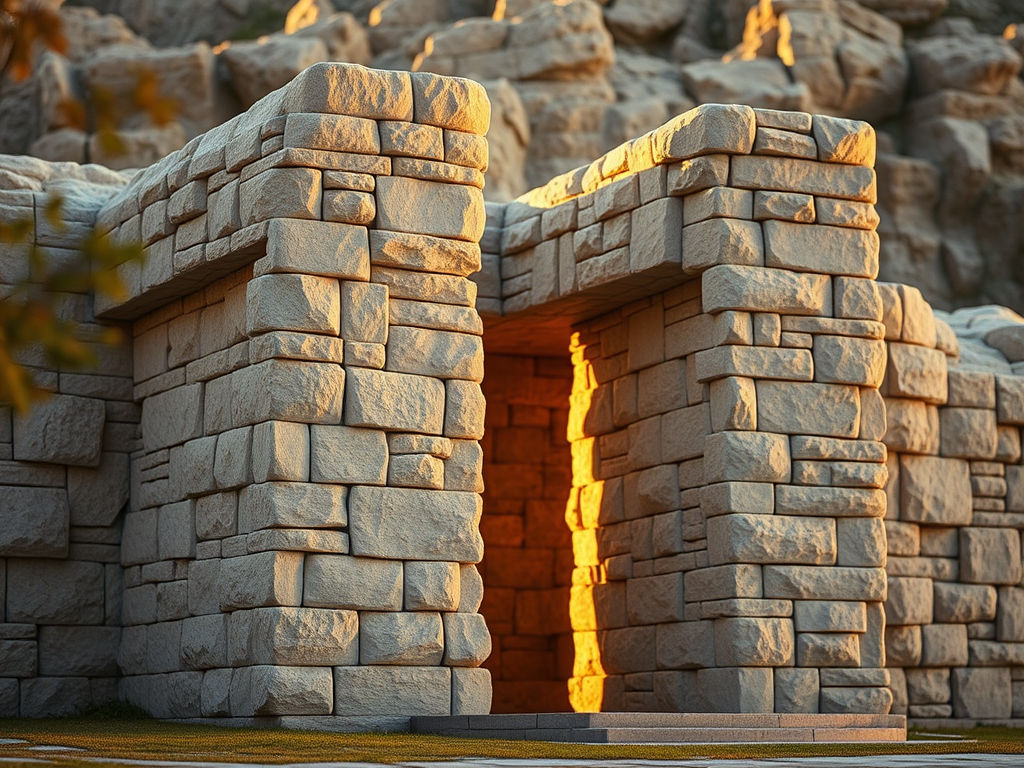
Brick-and-mortar offers one method of quick and easy construction, but carefully cut stones offer a multitude of advantages. George Washington likely recognized that building a country meant to last would require quality materials, especially with the foundation.
Periodic checks to assess progress are necessary. If a single stone is weak or slightly out of place, the error increases exponentially. This results in crookedness or collapse.
Applying the stonemason’s tools determines integrity and strength. In Freemasonry, these tools are symbolic of honesty, justice, and fairness as applied to an individual.
Perhaps Polk was imperfect and a little sloppy in his construction techniques, necessitating correction. Nevertheless, the synchronistic appearance of master numbers for POTUS 11 suggests that the winds of fate brought the right person at the right time to lead the country onward and upward.
The arrival of POTUS 11 provides the first clue to interpreting the roadmap. We already knew how often someone new should be in charge of driving. Now we know when to pull over for a closer look.
Sacred geometry and numbers guide decisions on direction and speed. Much depends on who takes over at this point.
What if they don’t know how to read the map? What if they get lost or fall asleep at the wheel?
Will they go off the road, suffer a collision, experience mechanical failure, or run out of gas?
What unknown dangers await?
According to the roadmap, it’s a long haul to the next pitstop of POTUS 22. The next driver doesn’t last long, with three bad drivers to follow.
The vice president of POTUS 11, George Dallas, could have become POTUS 12 at any time. This may have occurred if Polk had died a few months earlier while still in office.
In the 1848 election, POTUS 8 (Van Buren) made another run as a Free Soil Party candidate, instead of Democratic. As a third-party candidate with his abolitionist policy, he garnered only ten percent of the popular vote. Election victory went to Zachary Taylor who appeased those on both sides of the abolition issue.
POTUS 12 Zachary Taylor (1849-1850) One-term Whig. Military Service: War of 1812, the Black Hawk War, and the Second Seminole War. He was a General in the Mexican-American War and was considered a national hero. This status propelled him to the presidency. Opposed the Compromise of 1850, but died in office before exercising veto powers. The second POTUS to die while in office, of gastroenteritis after 492 days. Some suspected that POTUS 12 was poisoned by slavery advocates. Although a slaveholder, he resisted domestic expansion. The Civil War begins 11 years after the death of POTUS 12.
POTUS 13 Millard Fillmore (1850-1853) One-term Whig. US Representative from New York. Fillmore ascended to the presidency as vice president to POTUS 12. He brought an abrupt shift in policy, resulting in the resignation of his entire Cabinet. The Compromise of 1850 addressed issues of slavery in states added after the Mexican-American War. During this time, California was admitted to the Union as the 31st state. The slave trade in DC was abolished, and the Fugitive Slave Act was signed. He lost the support of fellow Whigs and did not receive the party nomination for the next election. First president to have running water in the White House. Frequently ranks among the Top 10 worst POTUS.
POTUS 14 Franklin Pierce (1853-1857) One-term Democratic. Military Service: Mexican-American War as Brigadier General with victories in Mexico City. US Representative and Senator from New Hampshire. Attempted to gain Central American territory from Britain and persuade Spain to sell Cuba. Many conflicts with statehood and slavery, Kansas-Nebraska Act and repealed the Missouri Compromise. Believed territories should decide on the issue of slavery. Often appears near the top of lists for the worst POTUS.
POTUS 15 James Buchanan (1857-1861) One-term Democratic. Freemason. Military Service: War of 1812 a private in the Pennsylvania Militia during the British invasion of Maryland. Five terms in the House of Representatives and a Senator for 10 years. Secretary of State under POTUS 11. Minister to Great Britain under POTUS 14. Inherited a divided nation over slavery, and tried to walk the middle road. With Democrats split and Whigs destroyed, gave rise to the Republican party. POTUS 15 claimed that Congress had no constitutional power to deprive persons in new territories of property rights (slaves). He attempted to admit Kansas Territory as a slave state. Minnesota, Oregon, and Kansas became the 32nd, 33rd, and 34th states, all free. This tipped the balance toward more free states, which upset a few folks. Buchanan beats out his two predecessors in topping the list of worst POTUS.
The 1857 Dred Scott decision of the Supreme Court denied citizenship to enslaved people and blacks of African descent. The Court asserted that Congress had no authority to ban slavery.
At the time of the 1860 election, the Democrats in the North and South split. As a result, each region nominated its own candidate. The Republican nominee, Lincoln, did not appear on Southern ballots amid the cries for secession. POTUS 15 denied the right of states to secede while admitting that the federal government could not prevent it. Hoped for compromise, but secessionists would not budge, resulting in troops being sent to Fort Sumner in 1861.
POTUS 16 Abraham Lincoln (1861-1865) Two-term Republican (National Union). Military Service: Militia Captain in the Black Hawk War. Gained national recognition during eight years in the Illinois legislature and during debates for Senator. Nominated as the Republican candidate in the 1860 election and built the party into a strong national organization. Old Abe inherited a huge mess. His entire presidency confronted the issue of slavery. He faced a divided nation at war with itself. The American Civil War involved 11 Southern States that seceded to form the Confederate States of America. Lincoln is, of course, known for the Emancipation Proclamation, freeing all slaves.
The Thirteenth, Fourteenth, and Fifteenth Amendments to the Constitution provided equal rights, including voting, to all people of African descent. POTUS 16 signed the Pacific Railway Act during wartime. This was partly to support the Union. He authorized the construction of a transcontinental railroad with bonds and land grants to corporations. The subsequent Homestead Act encouraged settlers to go west. West Virginia and Nevada became the 35th and 36th states to join the Union. POTUS 16 was re-elected in 1864, only to be assassinated days into his second term.
Third POTUS to die while in office, the first by assassination. Lincoln is the third of four presidents featured on Mount Rushmore. His likeness is found on the one-cent coin (penny) and the five-dollar ($5) bill. After a string of three weak and incompetent presidents, Lincoln often ranks as the number one most influential POTUS. Not enough can be said about the impact he had on the nation.
POTUS 17 Andrew Johnson (1865-1869) One-term Democratic (National Union). Freemason. Military Service: Military Governor of Tennessee, Brigadier General in U.S. Army. Served in House and Senate. Vice president to POTUS 16. He was a slaveholder who freed personal slaves in 1863. In 1864, he freed the slaves in Tennessee. He did this after unsuccessfully lobbying POTUS 16 to exempt Tennessee from the Emancipation Proclamation. Opposed Reconstruction efforts. Nebraska became the 37th state. Civil Rights Act of 1866 bestowed American citizenship upon all negroes and forbid discrimination. Later, with the passage of the 14th Amendment all former Confederate states, except Tennessee, refused to ratify. POTUS 17 was tried and acquitted on 11 articles of impeachment. POTUS 17 often ranks high on the list of Top 10 worst POTUS.
POTUS 18 Ulysses S. Grant (1869-1877) Two-term Republican. Military Service: West Point graduate. He served in the Mexican-American War under General Zachary Taylor (POTUS 12). As a General during the American Civil War, he led the Union Army to victory over the Confederacy. Colorado became the 38th state during this administration. Grant had one slave who was freed. POTUS 18 passed the Yellowstone National Park Protection Act, establishing the world’s first national park in 1872. Could have sought a third term but threw his support behind Garfield. Grant’s likeness is found on the fifty-dollar ($50) bill.
SUMMARY OF CYCLE TWO
| 1 | 2 | 3 | 4 | 5 | 6 | 7 | 8 | 9D |
| 10 | 11 | 12D | 13 | 14 | 15 | 16A | 17 | 18 |
- Master Number: POTUS 11
- Freemasons: 3. POTUS 11, POTUS 15, POTUS 17
- Slaveholders: 5. POTUS 10, POTUS 11, POTUS 12, POTUS 17, POTUS 18 although most opposed the international slave trade and domestic expansion of slavery. Under POTUS 16 Emancipation Proclamation freed all slaves after the Civil War.
- Death while in office: 2. POTUS 12 from suspicious natural causes, and POTUS 16 by assassination
- States added: 12. POTUS 10: FL; POTUS 11: TX IA, WI; POTUS 13: CA; POTUS 15: MN, OR, KS; POTUS 16: WV. NV; POTUS 17: NE; POTUS 18: CO, bringing the total to 38 (3+8=11)
- One-term: 7. Four Democratic, Three Whig, with POTUS 12 dying in office; Two-terms: 2. Two Republican, with POTUS 16 assassinated early in the second term.
- Duration: 36 years. Most presidents in this cycle served only one term. Additionally, there were two deaths. As a result, this cycle wrapped up 16 years faster than the first cycle of 52 years. Because this cycle concluded 36 years sooner than it would have if each POTUS served two full terms, Cycle Three arrived in an accelerated time frame. Cumulatively, the next cycle began 56 years earlier than it could have.
- Inventions and Innovations: Kinemaoscope, phonograph, Gatling gun, American football, and the use of medical anesthesia just in time for the Civil War. Kerosene replaced the use of whale oil for lighting. Oil rigs in NY, OH, KY, PA, and WV. The Gold Rush beginning with POTUS 11 in 1848 continued through POTUS 14. In May of 1869, the Golden Spike was laid on the north shore of the Great Salt Lake, connecting rail lines originating in Sacramento and Omaha. The goal of POTUS 16 manifested in six years, thanks to teams of Chinese migrants, Mormons, and Irish refugees escaping famine. Engraved on the spike were the words: May God continue the unity of our Country as the Railroad unites the two great Oceans of the world.
- Population Centers: The largest cities at the end of this cycle: New York City (1.2 million), Philadelphia (847,000), Brooklyn (566,000), Chicago (500,000), Boston (362,000), Saint Louis (350,000), Baltimore (323,000), Cincinnati (255,000), San Francisco (233,000), and New Orleans (216,000)
UP NEXT>> POTUS 22: Two V or Not Two V
*Uncredited images created with WordPress AI Image Generator

This is part of a series entitled POTUS CODE: Election-Year Guide to Picking a President by the Numbers
My reviews of the numerical fingerprints remain nonpartisan, unbiased, without regard to policies or personality. I could provide an analysis of what I think it means, but wish to avoid appearing critical, judgmental, or showing favoritism to influence one way or another. For your convenience, refer to common interpretations below, or seek out other sources. You may cross-reference any numbers you consider significant and arrive at your own conclusions.
For Reference
- BIRTH DATE = Life Path to reveal opportunities, challenges, lessons
- VOWELS = Heart’s Desire
- CONSONANTS = Authentic Self
- FIRST NAME = Personality
- LAST NAME = Traits
- FULL NAME = Destiny or Expression
- MOST COMMON NUMBERS = Strengths
- LEAST COMMON OR MISSING NUMBERS = Weaknesses
| NUMBER | INTERPRETATION |
|---|---|
| 1 | confident leader |
| 2 | cooperative diplomat |
| 3 | expressive speaker |
| 4 | honest worker |
| 5 | freedom and change |
| 6 | responsible humanitarian |
| 7 | dignified educator |
| 8 | ambitious executive |
| 9 | compassionate philanthropist |
| MASTER NUMBER | INTERPRETATION |
|---|---|
| 11 | Signifies mastery over the physical plane, illumination, responsibility, mysticism, empathy, inspiration, psychic abilities, and spiritual insight. Some numerologists consider 11 to possess only negative characteristics, such as offensiveness and deviance. Chinese numerology relates 11 to the Tao, or the way of heaven. Negative characteristics commonly attributed to 11 include: deception, delusion, instability, dishonesty, and confusion. Note that these numbers reduce to 11: 29 and 92, 38 and 83, 47 and 74, 56 and 65. |
| 22 | Considered the “Master Architect” representing material mastery and the ability to manifest abstract ideas, innovation, intuition, detachment and objectivity, power, philanthropy and altruism, originality and invention, leadership and achievement. Negative characteristics commonly attributed to 22 include: fanaticism, perversity, immorality and lawlessness, insensitivity, rebellion, cynicism, malevolence, destruction, cruelty, tyranny. |
| 33 | Represents compassionate giving and selfless service to humanity, gentleness, and kindness. Negative traits include: callous, inhumane, selfish, malicious. |
| 44 | In numerology, the number 44 often represents a confident leader, efficient, energetic, and ambitious. Negatively it can manifest as intolerance, abuse, self-destruction, and ignorance. |
| 55 | Intelligent, skillful, talented, and active. Negative characteristics commonly attributed to 55 include: foolish and slovenly. |
| 66 | Cheerful and humorous. Negative: hateful, jealous, impatient. |
| 77 | Charming, adventurous, clever, adaptable. Negative: perverse, self-indulgent. |
| 88 | Successful, highly spiritual. Negative: dishonest, sarcastic, evil, ulterior motives. |
| 99 | Generous, fulfilled, compassionate, loving, joyful. Negative: possessive, immoral, deceptive, unfulfilled, aimless. |
For more information about master numbers and the numerical fingerprint of the word master see post HOCUS POCUS POTUS: Identifying the Numerical Fingerprint
A-1, B-2, C-3, D-4, E-5, F-6, G-7, H-8, I-9, J-10, K-11, L-12, M-13, N-14, O-15, P-16, Q-17, R-18, S-19, T-20, U-21, V-22, W-23, X-24, Y-25, Z-26
- 1= A J S
- 2 = B K T
- 3 = C L U
- 4 = D M V
- 5 = E N W
- 6 = F O X
- 7 = G P Y
- 8 = H Q Z
- 9 = I R
 POTUS CODE
1 Comment »